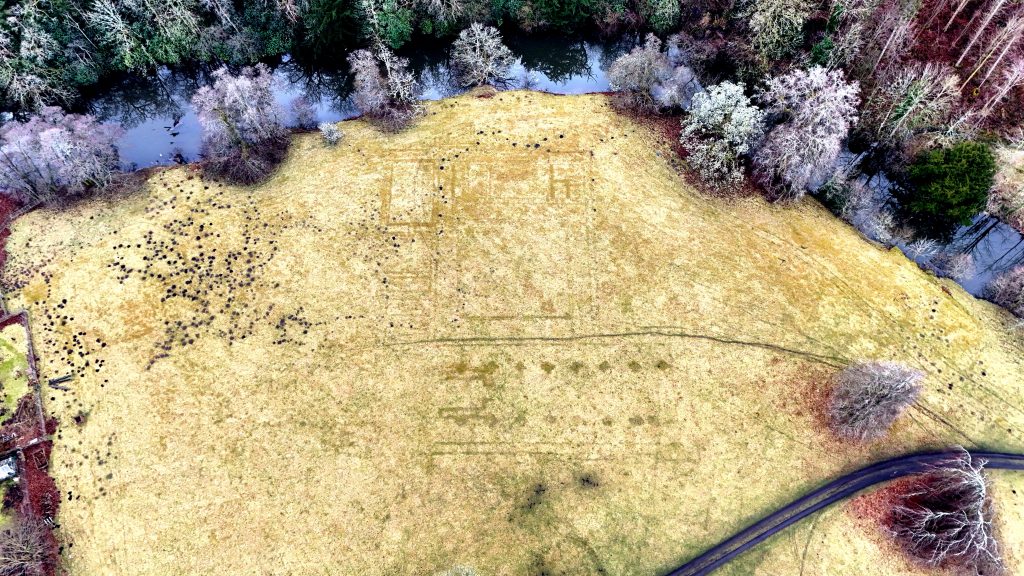
Tanner, writing in 1744 comments: The site of this house was granted, 4 Ed. 6. to Ralph Sadler and Laur. Winnington, and Tate (pp.34-6) puts the date of this sale as 15 December 1550.
Shrimpton (p. 24) fills in some later detail: he notes ‘… the monastic lands both adjacent to and within the parks had fallen into the hands of those hostile to Percy interests. The chief culprit in this was Sir John Forster (b.1520? – d.1602) who, soon after the dissolution of the monasteries came into possession of Alnwick Abbey and its lands. Claiming rights in the Lord’s forest of Alnwick granted by the de Vescys to the canons of Alnwick Abbey, he proceeded to despoil the parks and rob them of their timber and their deer.’
Tate says it was then sold to Robert Brandling in the early seventeenth century. The Brandlings welcomed King James for two nights at Alnwick Abbey on 7 May 1617 as he travelled north into Scotland, so there must have been a house of suitable status present on the site at that date.
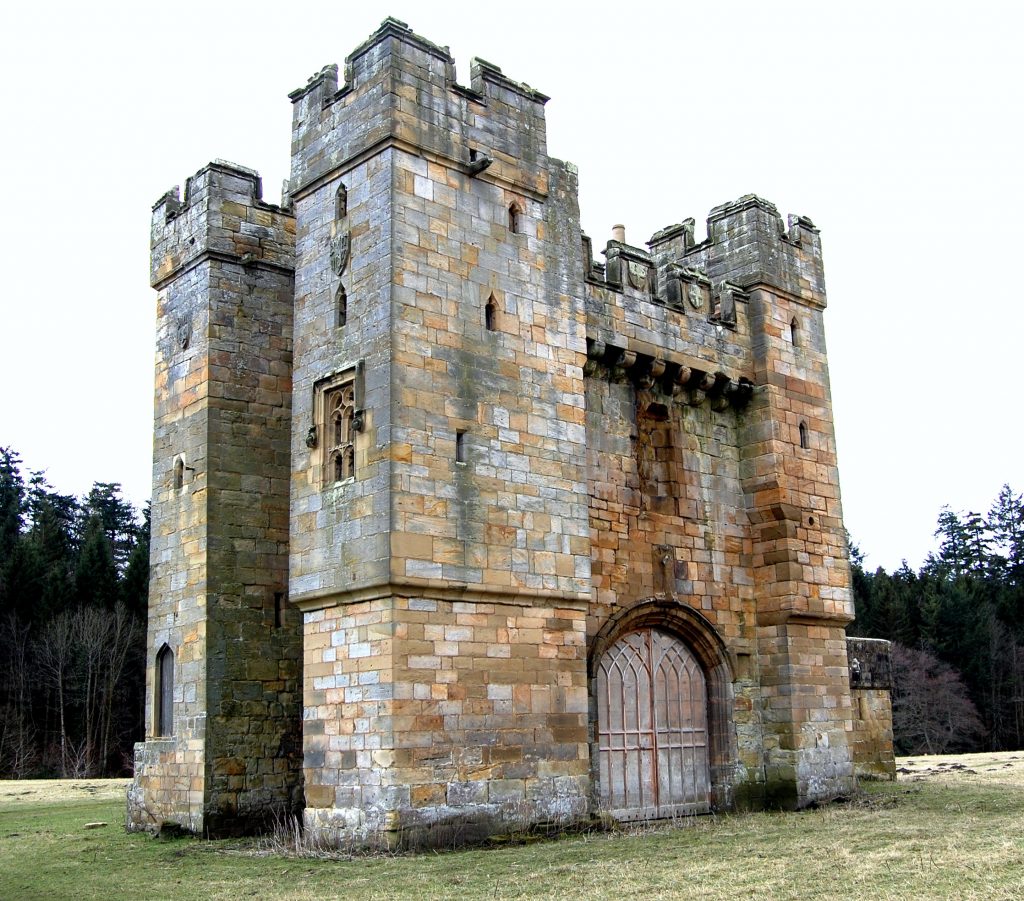
The Brandling family held the property for most of the seventeenth century, but by the early eighteenth century it was first mortgaged, and later sold, to John Doubleday. He built a house adjacent to the gatehouse constructed from the ‘ruins . . . which stood in his orchard, south of his pleasure garden’. Tate comments: ‘The only remains of this religious pile, is the court wall to the east . . . Adjoining to it, is an antient and strong tower, with four turrets, two at each end.’
Engravings made in the later eighteenth century show the Alnwick gatehouse with Doubleday’s house adjacent.
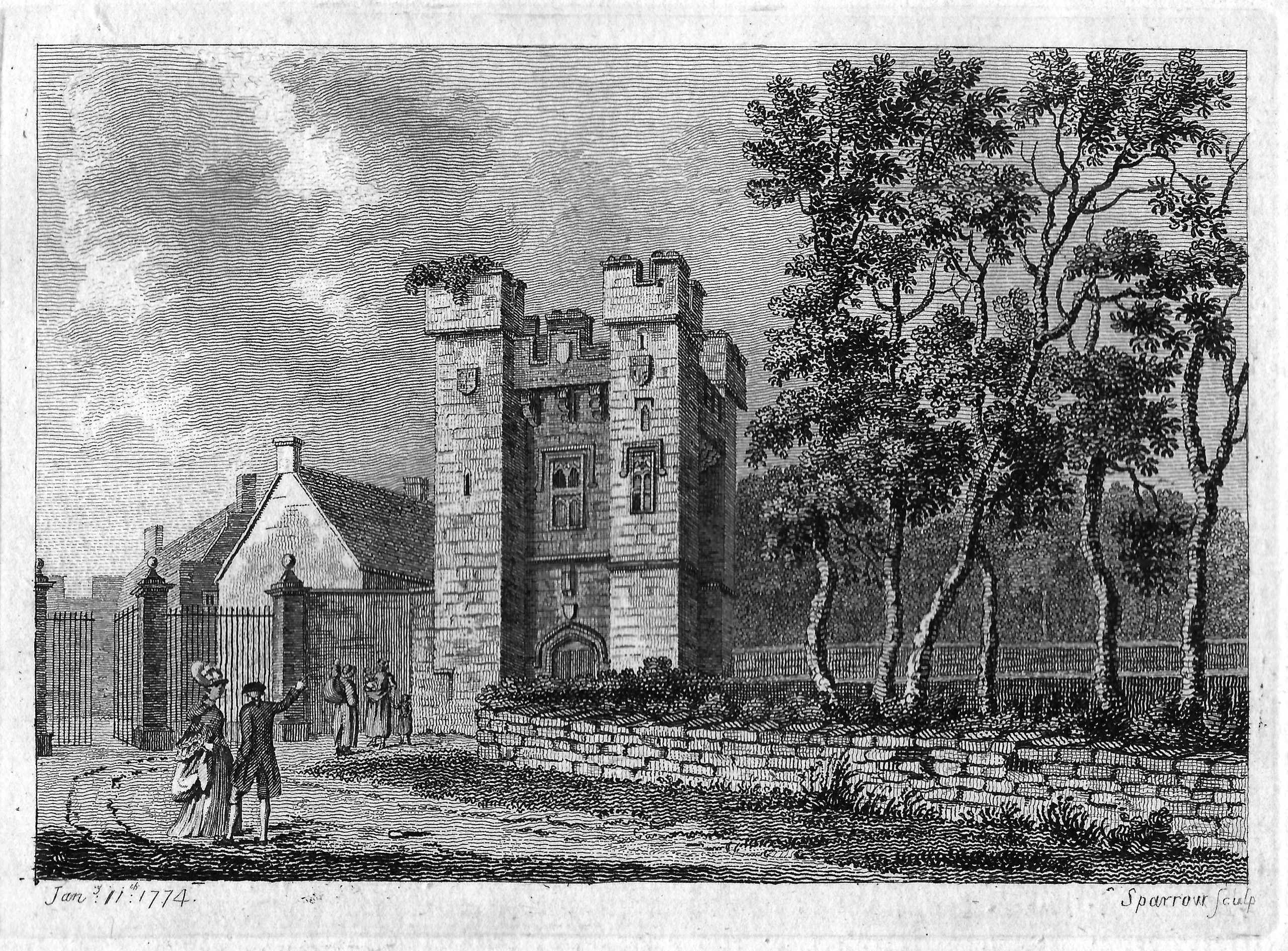
John Doubleday died in 1751 and his son Michael succeeded him, dying without issue in 1797. The abbey site was purchased by the Duke of Northumberland in 1800 and remains part of the estate to the present day.
Shrimpton (p. 55) comments: ‘This purchase provided the Duke with a new eastern boundary on the Aln for his park. He lost no time in razing the buildings of the abbey site to the ground, leaving only the gatehouse as his new entrance to the park. The gatehouse was repaired and made fit for a dwelling for a gatekeeper. … In 1806 the Duke’s architect, David Stephenson, was instructed to build a perimeter wall for the park at the abbey site. At the gatehouse the wall was to be 12ft high and elsewhere along its length, 7ft high ….’
The second Duke’s clearance of the monastic buildings had been so thorough that there were no indications of buildings present when the site was excavated by W H St John Hope in 1889. He commented that: ‘a perfectly level green field lay between the gatehouse and the River Alne, where the abbey of Alnwick had formerly stood‘.
At the completion of Hope’s 1889 excavations, the layout of the buildings was marked out (allegedly in ‘tarmac’) and were presumably visible for some years. However, nothing can now be seen of this marking on the ground, although the outline of the monastic builddings does show up in aerial photographs during periods of drought. See HERE for link to North East Heritage Library.
The abbey gatehouse tower continues to stand in splendid isolation in largely featureless pasture/parkland.