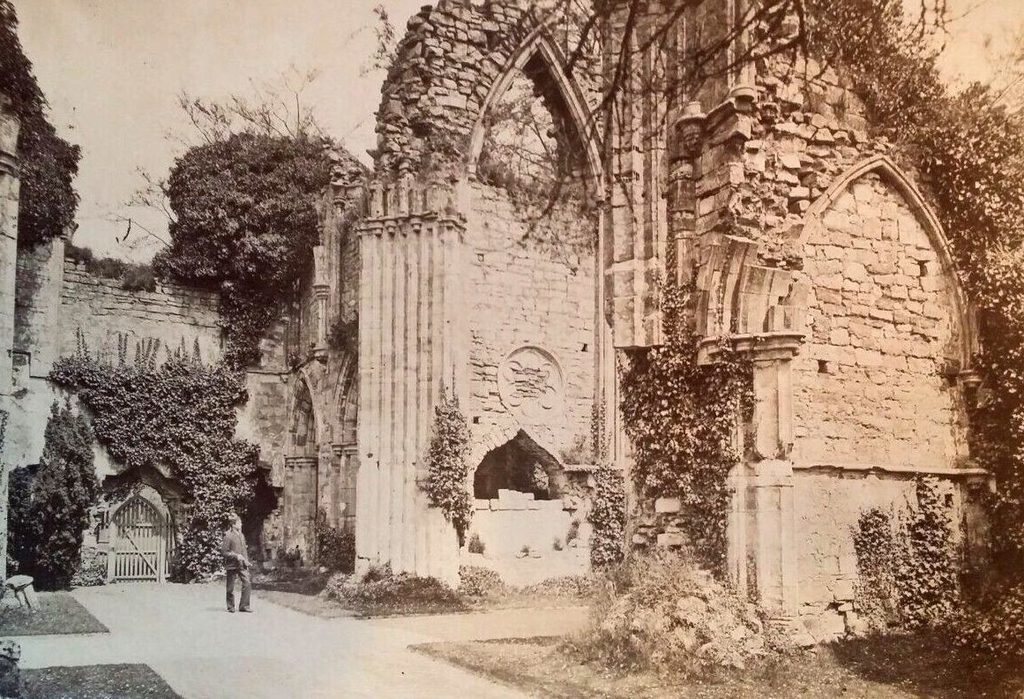
As noted in the ‘Dissolution’ section, Bayham was an early closure made by Wolsey in 1525 – part of a package of estates intended to fund his plan for secular colleges.
On Wolsey’s fall in 1529, the new colleges and the lands that supported them (including Bayham) reverted to the King, but it seems Henry excluded the Bayham estates from their endowment and chose instead to lease the lands out to his favourites. Bayham was first let to one of his courtiers, Anthony Browne – Lord Montagu who was later Henry’s Master of the Horse.
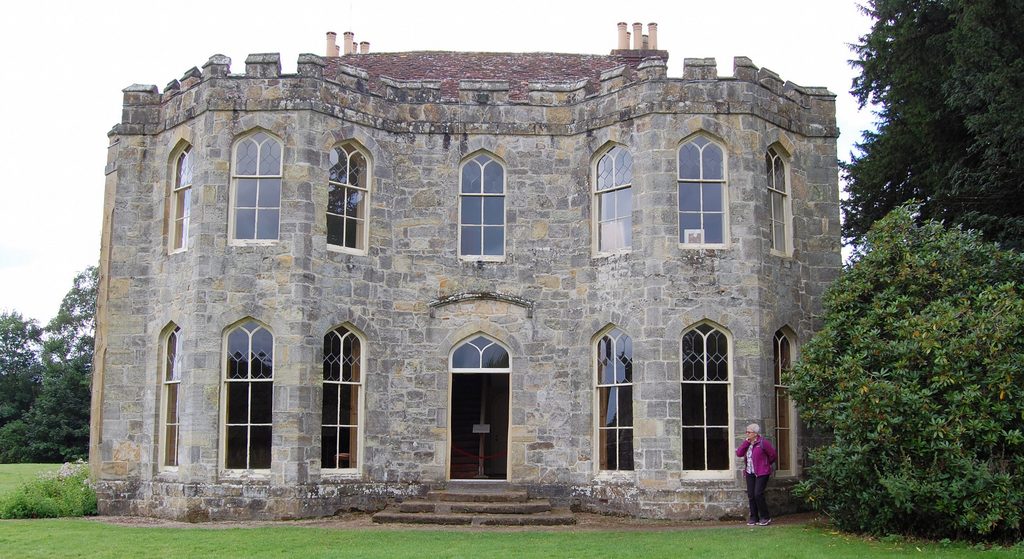
Bayham stayed in Royal hands until 1538, when Queen Elizabeth sold the Sussex portions of the estates to ‘two brothers called Adams’ who sold it on to a Mr Barham who passed it to another Browne family, apparently unconnected with Lord Montague. In 1714 Ambrose Browne sold the estate to Sir John Pratt, Chief justice of the King’s bench (whose younger son became Lord Chancellor and later the first Earl of Camden). During John Pratt’s time, his steward chose to unroof the transepts which had stood complete, perhaps in use as a barn. John Pratt died in 1725 and thankfully, his successors came to value the ruins as a picturesque aspect and their chances of survival were improved. His grandson (also John Pratt) built the first villa (later named the Dower House) on the site – this was enlarged by his son (John Jeffries Pratt and the second Lord Camden)) when he inherited the estate in 1794.
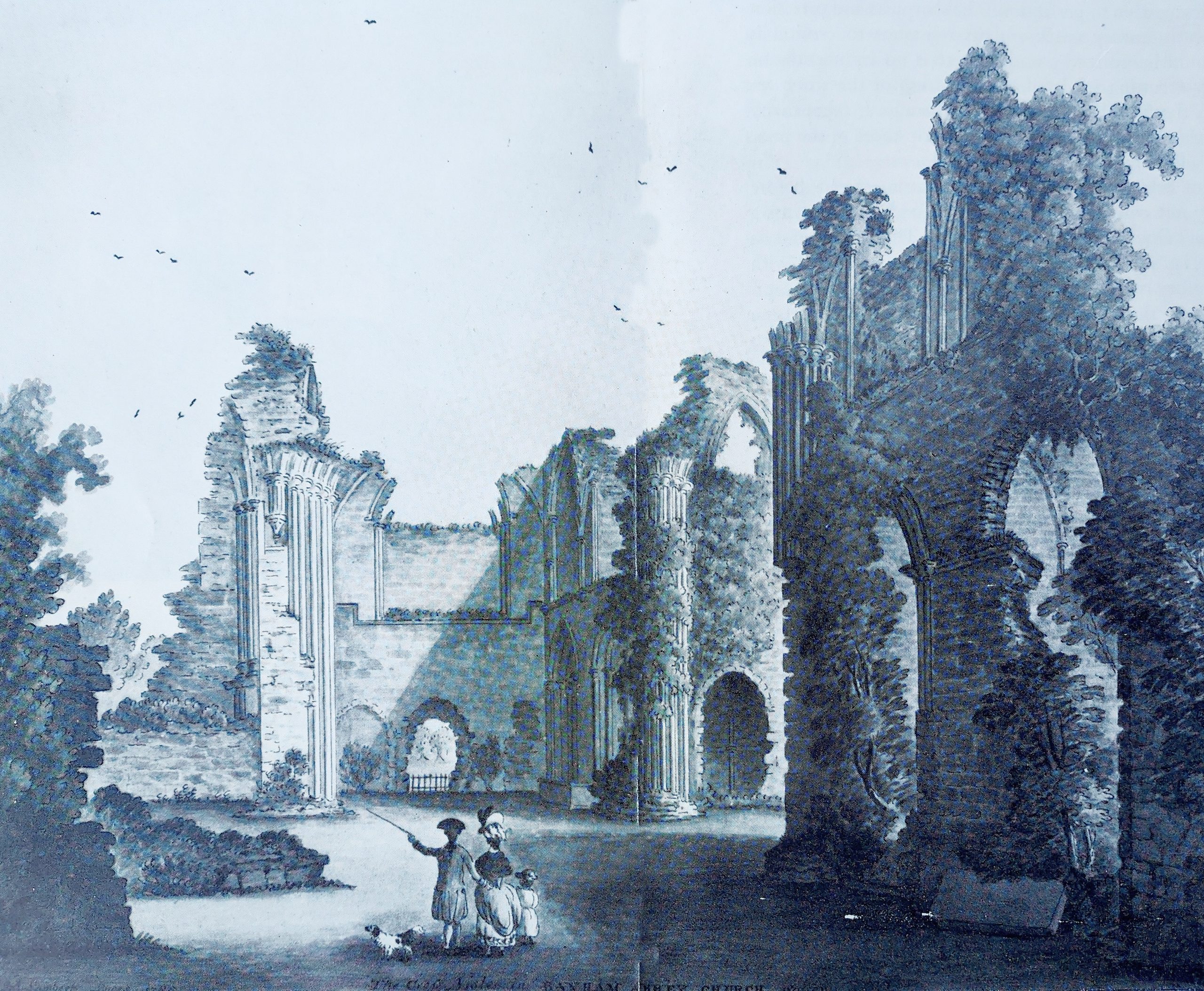
In 1799, and again in 1814, Lord Camden was advised by the landscape architect Humphrey Repton to demolish the Dower House and build a ‘proper’ mansion on the opposite valley side – but it was not until 1870 that a house was built where Repton suggested.
The abbey ruins were ‘tampered’ with and landscaped on the advice of Humphrey Repton and William Wilkins. In the 1770s they altered the gatehouse by taking parts of the Chapter House vestibule (its columns and arches were robbed) to create a ‘Summer House’ and around 1800, the massive buttressing of the south wall of the abbey church was carried out – presumably to stabilise the ruins.
The Camden family placed Bayham Abbey ruins in the guardianship of the state in 1961. The site was conserved and prepared for public viewing by the Ministry of Public Buildings and Works (later the Department of the Environment and English Heritage) and was opened to the public in 1970.