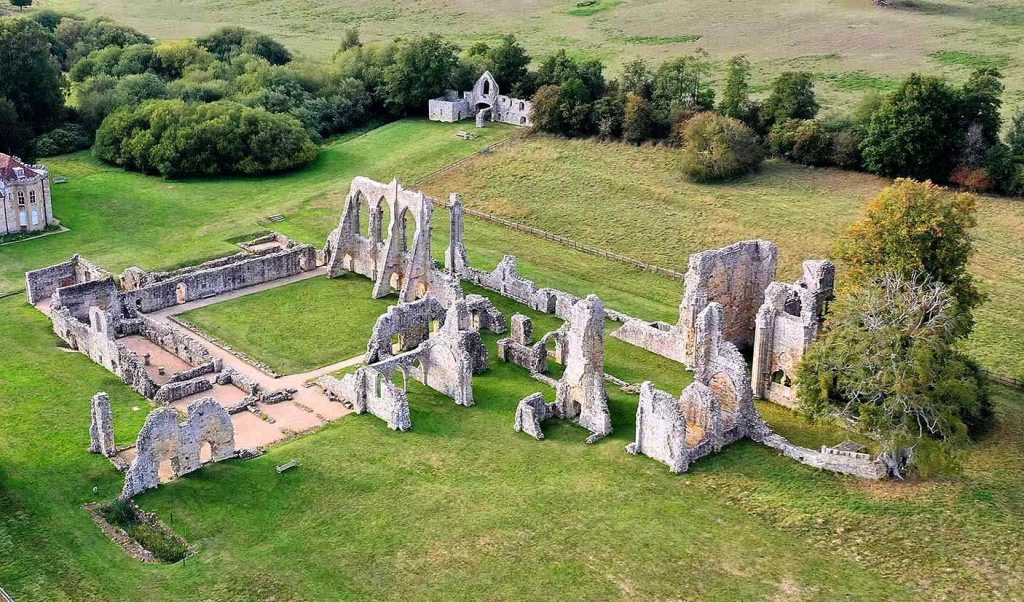
BAYHAM ABBEY
SUMMARY and LOCATION:
NGR: TQ 65006 36353
Bayham Abbey lies four miles south east of the later town of Tunbridge Wells in the secluded valley of the river Teise which forms the boundary between Kent and Sussex. It is an idyllic location typical of many secluded Premonstratensian and Cistercian sites.
Bayham was founded by Robert de Thornham around 1208 with construction of the church and claustral ranges to the south. It was the product of the union of two failing houses at Brockley and Otham. Bayham lay on the boundary of Kent and Sussex and, more significantly and like more than one other Premonstratensian house, on the boundary of two dioceses, befitting its exemption from both. Since both contributories had a different mother-house, Bayham, to save ill-feeling but ultimately to her advantage, was adopted as a daughter of Prémontré herself, a privilege shared only in England by St Radegund’s, near Dover. Even Newhouse was only affiliated to Licques, near Calais.
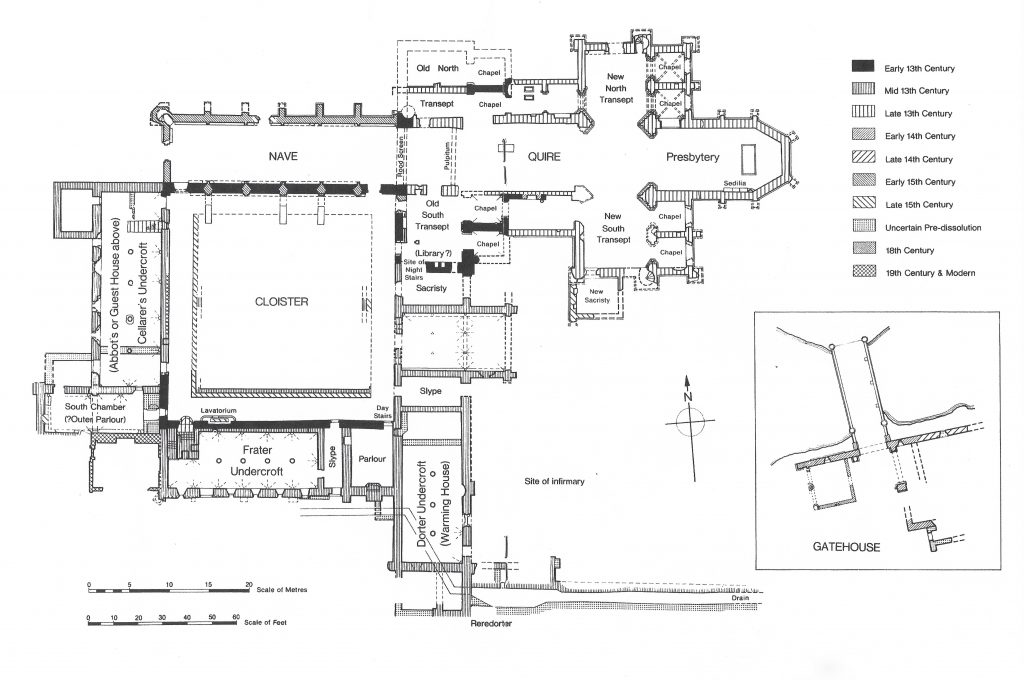
The east end of the church was lavishly extended during the early decades of the thirteenth century, after which attention may have turned to the outer court, but only the fourteenth century northern gatehouse survives here. Fifteenth century alterations included renovation of the cloister and changes at the south end of the west range.
The abbey was suppressed early, in 1525, as one of the supposedly unworkable monasteries closed by Cardinal Wolsey in order to benefit his new colleges. The closure led to an ‘unseemly riot’ which reoccupied the buildings and elected a new abbot. The ringleaders were arrested and imprisoned. Following Wolsey’s fall, the Bayham estates passed to the Crown and were let to various of the King’s favourites.
In 1714 the Bayham estate was purchased by Sir John Pratt, ancestor of the family that has owned it ever since. Pratt and his descendants valued the picturesque romantic ruins and built a villa adjacent to the cloister. As a result, however, the ruins have been tampered with and ‘landscaped’ in the process.
The present Marquis of Camden placed the ruins in the guardianship of the state in 1961. They are now managed by English Heritage and open to the public. See HERE for info.